House Rabbit Care
Welcome!
Welcome!
Welcome!

Congratulations on starting your new adventure into the wonderful world of rabbits! Here are a few basic guidelines to help you get started in making your new fur family member healthy and happy
Behavior
Welcome!
Welcome!

Rabbits make wonderful companions and each and every one will have its own distinctive personality. They are intelligent and even litter-box-trainable! (More on that later) They are very social and curious. Your rabbit will enjoy exploring its new home, learning the environment, and becoming a part of your daily lives. While rabbits do sound a lot like a cat or dog, they are not. Most rabbits do not usually like to be picked up or cuddled. Being a prey animal, their playing and behavior is very different from other pets. But they are affectionate, and, once you learn and understand why they do what they do, they will have you smitten!
Housing
Welcome!
Housing

Rabbits are prey animals. There are a vast number of other animals trying to eat them as well as other hidden dangers outdoors. Therefore, it is most beneficial that rabbits live indoors. Not only from the dangers, but also because rabbits are social animals. They are meant to be in a family, and most prefer a companion. That doesn't mean they can't be healthy and happy individually. Single rabbit care just requires more attention, enrichment, and time.
Many stores sell rabbit cages and hutches. The majority of these are not big enough to house a rabbit. A rabbit should NOT be kept in a cage. The best option for rabbit habitat is a metal exercise pen, meant for dogs. The rule of thump is 8 square feet PER rabbit. The rabbit should be able to hop freely a few times in each direction. And depending on how high the rabbit can jump, the pen may need to be at least 3-4 feet high.
Habitat
Grooming
Housing
Rabbits do not have pads on the bottom of their feet like cats and dogs. Therefore they slip on surfaces like hardwood and tile. Linens, mats, blankets, rugs, and even vinyl can be put done on the floor to provide a soft surface and protect your flooring. Cages with wire floors are dangerous to rabbits. They cause painful sores called sore hocks on the bottom of their feet.
Your enclosure for your rabbit should include at least on litter box, food and water bowls, and a place for your rabbit to hide. Cardboard boxes work extremely well for this! You will find many also enjoy chewing and "redecorating" their cardboard home. Other items for your enclosure should be toys, soft places to lay, and enrichment like tunnels.
Grooming
Grooming
Grooming
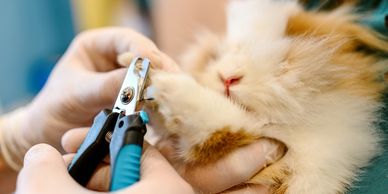
Rabbits are naturally very clean animals. They are always washing and cleaning themselves. NEVER bathe your rabbit. It can die of shock or become ill from hypothermia. Most rabbits will need their fur brushed once or twice a week. Be aware rabbits SHED! They will go through molting and lose large quantities of fur every 3 months or so. But they are always losing fur! Keeping your rabbit groomed and brushed keeps them from ingesting the fur that can lead to illness such as GI stasis or an obstruction.
A rabbits nails should be trimmed every 3-4 weeks. Only trim the very tip or clear portion of the nail. Using a light to see through the nail to insure you do not clip the quick. This result in bleeding and cause the rabbit pain and discomfort.
Diet
Grooming
Grooming

Hay- The majority (80%) of a rabbits diet should consist of hay. Hay should be available to eat at ALL times. A rule of thumb is a rabbit should eat their own volume in hay every single day! Choose a grass hay such as Timothy hay, orchard hay, or oat hay. Alfalfa hay should only be for very young rabbits under 6 months of age. Always make sure your hay is fresh. It should look slightly green, smell sweet, have long strands, and dust-free.
Water- Rabbits drink a lot! They should have fresh, clean drinking water. Optimally it should be checked at least twice a day. Heavy ceramic bowls are a good option because many times rabbits will tip their bowls over. Having a hanging water bottle as a back up to ensure they have water if it is tipped, especially if you are gone for extended hours a day.
Pellets- Good quality pellets add nutrients to a rabbits diet. About 1/4cup per day for each adult. Choose a pellet that is primarily timothy hay that is high fiber and low protein is best. Pellets without added treats, oats, seeds, and dried veggies are the best and is the healthiest for your rabbit.
Fresh Greens- Rabbits should have 2 cups of fresh leafy greens per day. Good options are spring mixes, romaine, red and green leaf lettuce, dandelion greens, cilantro, mint, and parsley. Greens that should be fed in moderation include, kale, spinach, bok choy, collard greens, mustard greens, and swiss chard. Make sure to introduce new foods slowly to ensure it is handled well. A variety is always optimal.
Fresh veggies and fruits- Fresh fruit and veggies should be given as a treat! Healthy rabbits can have up to 3 TEASPOONS of fruits and veggies per day. Good veggies and fruits are apple, blueberries, squash, bell pepper, pear, strawberries and melon. Rabbits LOVE banana, but since it is very high in sugar should be given very sparingly. A good idea is to use these foods as training and treats.
Commitment
Commitment
Commitment
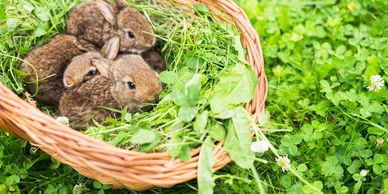
As you can see, rabbits are a lot of work. They are considered an exotic pet. Many times a rabbit will take more time and require more responsibility than a cat or dog. They need daily care that includes food, water, greens, hay spot-cleaning their enclosure, and exercise. Weekly care should be deep cleaning their enclosure, grooming, and nail trimming when needed. Yearly, your rabbit should see a rabbit savy vet. Not only do rabbits take a lot of time and responsibility, owing a rabbit means providing a large space, keeping fresh hay and greens on hand, and accepting that rabbits CHEW. This behavior is not only normal, it is a necessity for proper teeth. So please be aware as you start this adventure that some of your possessions will be damaged or destroyed at some point. Finally, rabbits are sensitive to change and do best when they have daily schedules. An adult should always be overseeing and ensuring consistent and proper care.